Source Sport Motorcycle for Racing, Commuting, and Off-Road
Explore 30 listings of sport motorcycle options including racing and cub styles with varying engine sizes and braking systems. Buyers can compare specifications like displacement, cooling methods, and certifications to find suitable models for diverse riding needs.
Key considerations
Products List






Comprehensive Sourcing Guide
Strategic Sourcing Guide for Sport Motorcycle Procurement
Navigating the global market for sport motorcycles requires a disciplined approach that balances performance expectations with rigorous compliance verification. The supply landscape for these vehicles is diverse, ranging from high-displacement racing machines to compact urban commuters, each governed by distinct technical parameters and regulatory frameworks. Buyers must anchor their sourcing decisions in verifiable product attributes rather than marketing claims, ensuring that every procurement action aligns with specific operational needs and legal requirements in the destination market. This guide outlines the critical dimensions of sourcing sport motorcycles, focusing on technical specifications, certification landscapes, cost structures, and quality assurance protocols derived from current market data.
Technical Specifications and Performance Parameters
The foundation of any successful procurement strategy lies in a precise understanding of the technical specifications that define the vehicle's performance envelope. In the current market, sport motorcycles exhibit a wide variance in engine displacement, cooling methods, and braking systems. Buyers must distinguish between models designed for high-speed racing and those intended for general utility or entry-level sport riding. Data indicates that engine sizes for sport-oriented units typically fall into specific displacement brackets, such as the 126-250cc range or the 251-500cc category, with some compact models falling under 50cc for specific regulatory environments.
The engine configuration is another critical differentiator. Most modern sport motorcycles utilize a four-stroke engine architecture, often configured as a single-cylinder unit for simplicity and cost-efficiency, though larger displacement models may employ more complex arrangements. Cooling methods are predominantly air-cooled in the observed inventory, a factor that influences maintenance requirements and thermal management strategies during operation. Buyers should verify the specific cooling method for each model, as liquid-cooled variants may be required for high-performance applications in extreme climates.
Braking systems are equally vital for safety and handling. The market presents a spectrum of braking modes, from front disc and rear drum configurations to full dual-disc setups with hydraulic actuation. The presence of front and rear disc brakes is a common standard for sport models, offering superior stopping power compared to drum-only systems. Furthermore, the integration of digital speedometers and LED lighting systems has become a standard expectation for modern units, enhancing rider visibility and data acquisition. When evaluating a specific model, such as those designated with model codes like SH200-3 or SH250, buyers must cross-reference these specifications against their operational requirements to ensure compatibility.
Compliance and Certification Verification
Regulatory compliance is the most significant barrier to entry in international motorcycle trade. Buyers must rigorously verify that any potential supplier possesses the necessary certifications for their target export markets. The observed product data highlights a variety of certifications, including EEC, CCC, CE, DOT, EPA, and ISO9001:2000. Each of these standards serves a specific jurisdictional purpose. For instance, EEC and CE certifications are typically required for entry into the European Union, while DOT compliance is mandatory for the United States market. Similarly, CCC is essential for domestic sales within China, and EPA certification is a prerequisite for environmental compliance in the United States.
The absence of a specific certification does not necessarily indicate a non-compliant product, but it does suggest that the unit may not be legally sellable in certain regions without additional testing or modification. Buyers should not assume that a single certification covers all markets; instead, they must request documentation proving compliance with the specific regulations of the destination country. For example, a model marketed as a "50cc Racing Motorcycle" must still meet local noise and emission standards, which can vary significantly even within the same continent.
Furthermore, the presence of patents, such as appearance patents or utility model patents, indicates a level of intellectual property protection that can be a value-add for buyers seeking unique designs. However, the existence of a patent does not automatically guarantee safety or performance; it merely confirms that the design is protected. Buyers should verify the validity and scope of these patents to ensure they do not inadvertently infringe on third-party rights in their own markets.
Cost Drivers and Pricing Structures
Understanding the cost drivers behind sport motorcycle pricing is essential for budgeting and negotiation. The observed price range in the market spans from approximately $10 to over $4,000 USD, reflecting the vast diversity in product quality, technology, and intended use. Several factors influence where a specific unit falls within this spectrum. Engine displacement is a primary driver; models with higher displacement, such as those in the 251-500cc range, generally command higher prices due to increased material costs and engineering complexity.
The level of customization available also impacts cost. Products offering customizable colors or specific feature sets often carry a premium. Additionally, the packaging method, whether standard cartons or specialized steel frames with carton boxes, can affect the final landed cost due to shipping volume and weight. The "0.6CBM" and "0.5" standard volume measurements noted in product data suggest that packaging efficiency is a key consideration for logistics planning. Buyers should request detailed breakdowns of costs, including manufacturing, packaging, and certification fees, to understand the true value proposition of a supplier.
Minimum Order Quantities (MOQ) also play a role in the total cost of ownership. The market shows an MOQ range from 1 to 200 units. While a low MOQ of 1 allows for testing the market with minimal risk, it often results in a higher unit price. Conversely, ordering at the upper end of the MOQ range can significantly reduce the per-unit cost but requires a larger capital outlay and storage capacity. Buyers must balance these factors against their cash flow and inventory turnover expectations.
Typical Applications and Market Segmentation
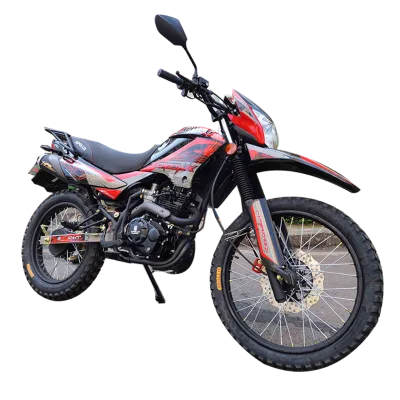
Sport motorcycles serve a variety of applications, ranging from professional racing to recreational riding and urban commuting. The market data reveals distinct segments based on vehicle type and performance. "Racing Motorcycle" models, often characterized by high speeds and advanced braking systems, are designed for track use or high-performance street riding. These units typically feature digital meters, hydraulic brakes, and optimized suspension systems, such as four-wheel solo suspension, to handle the stresses of high-speed maneuvering.
In contrast, "Cub Motorcycle" types and smaller displacement models (≤50cc) are often used for urban mobility, delivery services, or entry-level training. These vehicles prioritize fuel efficiency and ease of handling over raw speed. Some models are even foldable, catering to buyers with limited storage space or those requiring multi-modal transport solutions. The "LDOO" brand, for instance, offers electronic smart types with LED meters and specific range per charge capabilities, indicating a shift toward electric or hybrid powertrains in certain segments.
Buyers must align their procurement with the intended application. A fleet manager looking for delivery vehicles should prioritize durability and fuel efficiency, while a racing team would focus on performance metrics and suspension geometry. The "After 2010" year range observed in the data suggests that most available units are relatively modern, but buyers should still verify the production year to ensure the availability of spare parts and compatibility with current regulations.
Supplier Evaluation and Origin Analysis
Evaluating suppliers requires a deep dive into their geographic origins and production capabilities. The product data indicates that manufacturers are located in key industrial hubs such as Guangzhou, Jiangsu, and Zhejiang in China. These regions are known for their robust manufacturing ecosystems and supply chain efficiency. However, the location alone does not guarantee quality; buyers must assess the supplier's track record, production capacity, and quality control processes.
When evaluating a supplier, buyers should look for evidence of consistent adherence to standards like ISO9001:2000. This certification indicates a commitment to quality management systems, which is crucial for maintaining product consistency. Additionally, the ability to provide customization services is a significant advantage, allowing buyers to tailor products to specific market demands. The "Customerized" color options and "Customization: Available" attributes suggest that many suppliers are flexible in their production processes.
Buyers should also consider the "Place of Origin" details carefully. While all listed products originate from China, specific provinces may have different regulatory environments or logistical advantages. For example, suppliers in Zhejiang might have different export capabilities compared to those in Guangzhou. It is essential to verify the supplier's ability to handle the specific logistics requirements of the destination market, including documentation and shipping arrangements.
Quality Control and Long-Term Procurement Considerations
Ensuring long-term success in motorcycle procurement requires a robust quality control strategy. Buyers must implement rigorous inspection protocols before shipment, focusing on critical components such as the engine, braking system, and electrical components. The "New" condition of all observed products is a baseline requirement, but buyers should verify this through third-party inspection reports to ensure that no units have been previously used or damaged.
Long-term considerations include the availability of spare parts and the supplier's after-sales support. The "Single item" selling units suggest that some suppliers may not have established bulk distribution networks, which could complicate the procurement of replacement parts. Buyers should negotiate clear terms regarding warranty coverage and the availability of spare parts for at least five years. Additionally, the "Patented Product" status should be leveraged to ensure that the supplier has a vested interest in maintaining the quality and integrity of the design.
Finally, buyers should monitor the market for changes in regulations and standards. The dynamic nature of the motorcycle industry means that certifications and specifications can change rapidly. Staying informed about updates to EEC, DOT, or EPA standards will help buyers avoid compliance issues and ensure that their inventory remains viable in the long term. By combining technical diligence with strategic supplier evaluation, buyers can navigate the complex sport motorcycle market with confidence and efficiency.
FAQs
What certifications are available for sport motorcycles?
Available certifications include EEC, CCC, CE, DOT, EPA, and ISO9001:2000. Buyers must verify that specific units possess the required standards for their target export market, as EEC and CE are needed for Europe while DOT applies to the US.
Which engine sizes are common for sport motorcycles?
Common engine sizes range from under 50cc to 250cc and up to 500cc. Most units feature four-stroke engines, with displacement brackets typically falling into the 126-250cc or 251-500cc categories depending on the specific model type.
Can buyers customize the color of these motorcycles?
Yes, customization is available for colors and specific feature sets. Buyers should note that customizable options often carry a premium and require verification of the supplier's capacity to meet specific design requests within their production schedule.
What is the minimum order quantity for these units?
The minimum order quantity ranges from 1 to 200 units depending on the supplier. Lower MOQs allow for market testing but may result in higher per-unit costs compared to bulk orders at the upper end of the range.
Where are these motorcycles manufactured?
Manufacturing locations include Guangzhou, Jiangsu, and Zhejiang in China. Buyers should verify the specific place of origin for each supplier to ensure compliance with regional logistics and export documentation requirements for their destination market.
What braking systems are used on these bikes?
Braking systems vary from front disc and rear drum to full dual disc setups with hydraulic actuation. High-performance racing models typically feature front and rear disc brakes, while entry-level units may use simpler configurations.